
Tertiary sector
Offices, shops, sports facilities, hotels: buildings with variable occupancy, subject to the tertiary decree and the BACS decree.
Expand a building type to see its challenges and our solutions.
Building types
Offices

Offices: less energy, the same comfort
Match heating, cooling and ventilation to real occupancy and the weather, without replacing your equipment.
Your challenges

Tertiary decree
Reduction targets to meet and report every year on OPERAT.

Variable occupancy
Hybrid work and hot-desking: empty floors heated like full ones.

Occupant comfort
Temperature, air quality and fast response to complaints.
The Kipsum solution
- KiTwin: HVAC schedules adjusted daily to forecast weather and occupancy
- KiBoard: multi-site monitoring and tertiary decree reports
- ABB BuildingPro Vision: real-time supervision of floors and equipment
Regulations
Tertiary decree. Office buildings of 1,000 m² or more are subject to it; obligations fall on both owners and occupants, who share the actions under the lease. Targets: −40% consumption by 2030, −50% by 2040, −60% by 2050, with an annual declaration on OPERAT.
BACS decree. If the heating or cooling system exceeds 290 kW, a BMS of at least class C has been mandatory since 1 January 2025; above 70 kW, the deadline is 1 January 2030. All about the BACS decree
Specific to offices. Offices are fully eligible for CEE funding of the BMS (sheet BAT-TH-116, class A or B). Flex office and remote working make occupancy highly variable: this is where zone-based control pays off most. CEE funding
Client result
Our measured results, in other sectors: −14% on an industrial site, −20% on a logistics warehouse, −28% on a school complex, with payback under one year. See our case studies
Frequently asked questions
Can we optimise without replacing our equipment?
Yes. The KiSmart gateway connects to the existing BMS and KiTwin adjusts heating, cooling and ventilation schedules and setpoints every day.
How do you handle remote working?
Schedules follow the expected occupancy of each zone; lightly used floors are no longer heated or cooled like full ones.
Who declares consumption on OPERAT?
The owner and occupants, as set out in the lease. KiBoard provides the consumption data needed for the declaration.
Retail and multi-site

Retail and multi-site: one consistent portfolio, one screen
Branches, stores, outlets: the same settings everywhere and central monitoring.
Your challenges
Many small sites
Little time on site, settings that drift from one site to another.
Opening hours
Buildings heated or cooled outside opening hours.
Rollout cost
A solution that installs quickly, without heavy works.
The Kipsum solution
- Essential offer: a standard BMS, rolled out site by site
- KiBoard: every site, alarm and meter on one screen
- KiTwin on the most energy-intensive sites
Regulations
Tertiary decree. Retail premises of 1,000 m² or more are covered, including when several units in the same building or site reach that threshold together; results can be pooled across a portfolio. Targets: −40% consumption by 2030, −50% by 2040, −60% by 2050, with an annual declaration on OPERAT.
BACS decree. If the heating or cooling system exceeds 290 kW, a BMS of at least class C has been mandatory since 1 January 2025; above 70 kW, the deadline is 1 January 2030. All about the BACS decree
Client result
Our measured results, in other sectors: −14% on an industrial site, −20% on a logistics warehouse, −28% on a school complex, with payback under one year. See our case studies
Frequently asked questions
Can you deploy quickly across dozens of sites?
Yes: the Essential offer relies on a standardised BMS, installed without major works, with the same configuration everywhere.
How do you avoid heating or cooling outside opening hours?
Schedules follow each store’s hours, public holidays included, and KiBoard flags any site that drifts.
Do all sites need KiTwin?
No: we often start with the highest-consuming sites, while the others are monitored in KiBoard.
Sports and leisure
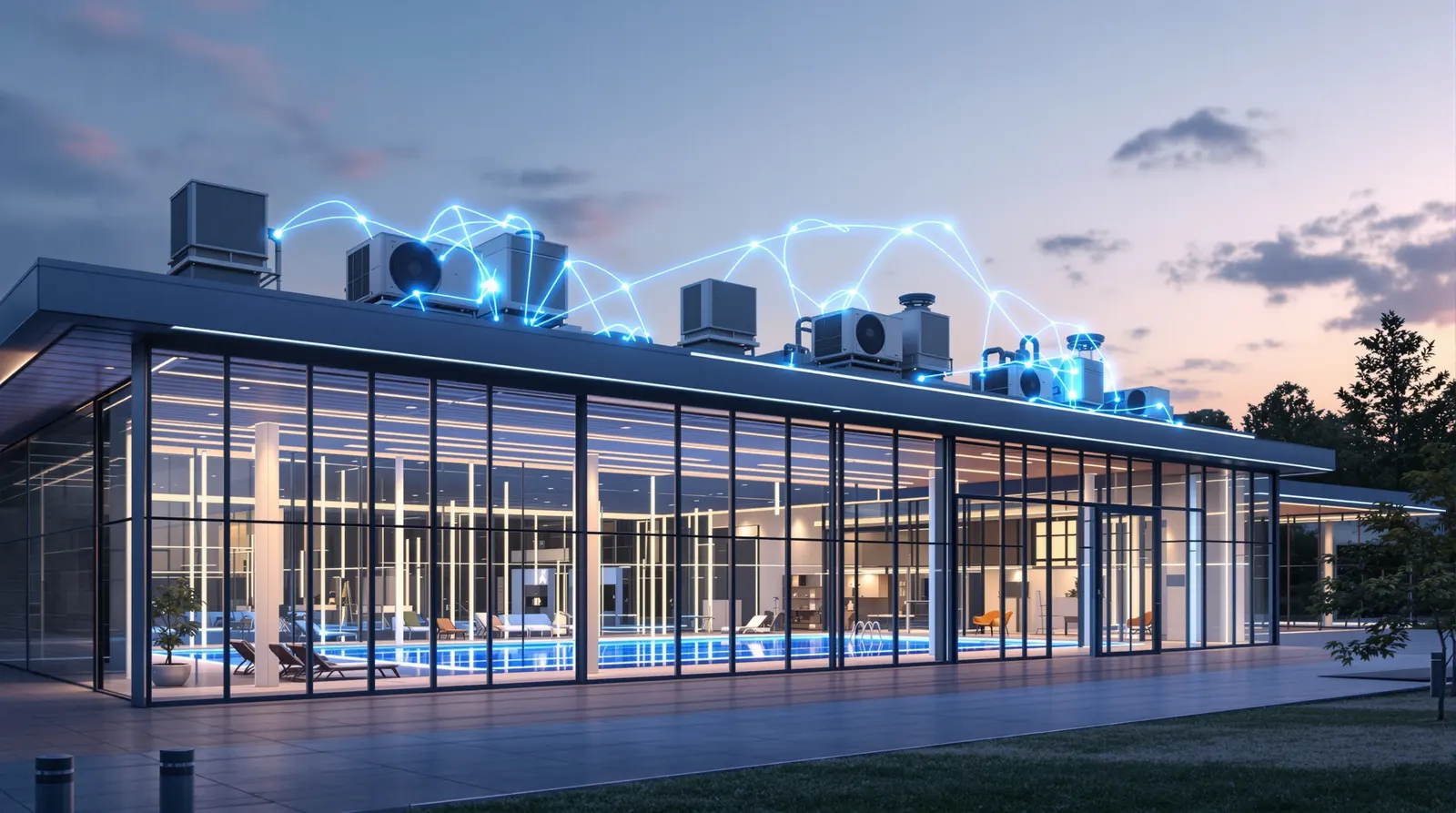
Sports and leisure: pools and gyms run to actual needs
Energy-intensive facilities with highly variable attendance, run to the actual time slots.
Your challenges
Variable attendance
Full time slots, then off-peak hours.
Swimming pools
Water, air and dehumidification: the biggest energy users.
Heat pumps
Heat pumps to run in their most efficient range.
The Kipsum solution
- KiTwin: schedules aligned with booking slots
- Heat pump and air handling optimisation
- Weather-corrected savings measurement
Regulations
Tertiary decree. Gyms, swimming pools and leisure facilities of 1,000 m² or more are covered. Targets: −40% consumption by 2030, −50% by 2040, −60% by 2050, with an annual declaration on OPERAT.
BACS decree. If the heating or cooling system exceeds 290 kW, a BMS of at least class C has been mandatory since 1 January 2025; above 70 kW, the deadline is 1 January 2030. All about the BACS decree
Specific to swimming pools. Health rules on pool water treatment and renewal always apply; optimisation targets water and air heating, dehumidification and opening schedules.
Client result
Our measured results, in other sectors: −14% on an industrial site, −20% on a logistics warehouse, −28% on a school complex, with payback under one year. See our case studies
Frequently asked questions
How do you follow highly variable attendance?
Schedules follow actual usage slots, and restarts are anticipated based on the weather.
What can be saved on a swimming pool?
The biggest items are water and air temperature and dehumidification: these are optimised first, within health rules.
Can our heat pumps be optimised?
Yes: KiTwin runs them in their best efficiency range, anticipating the weather.
Hospitality
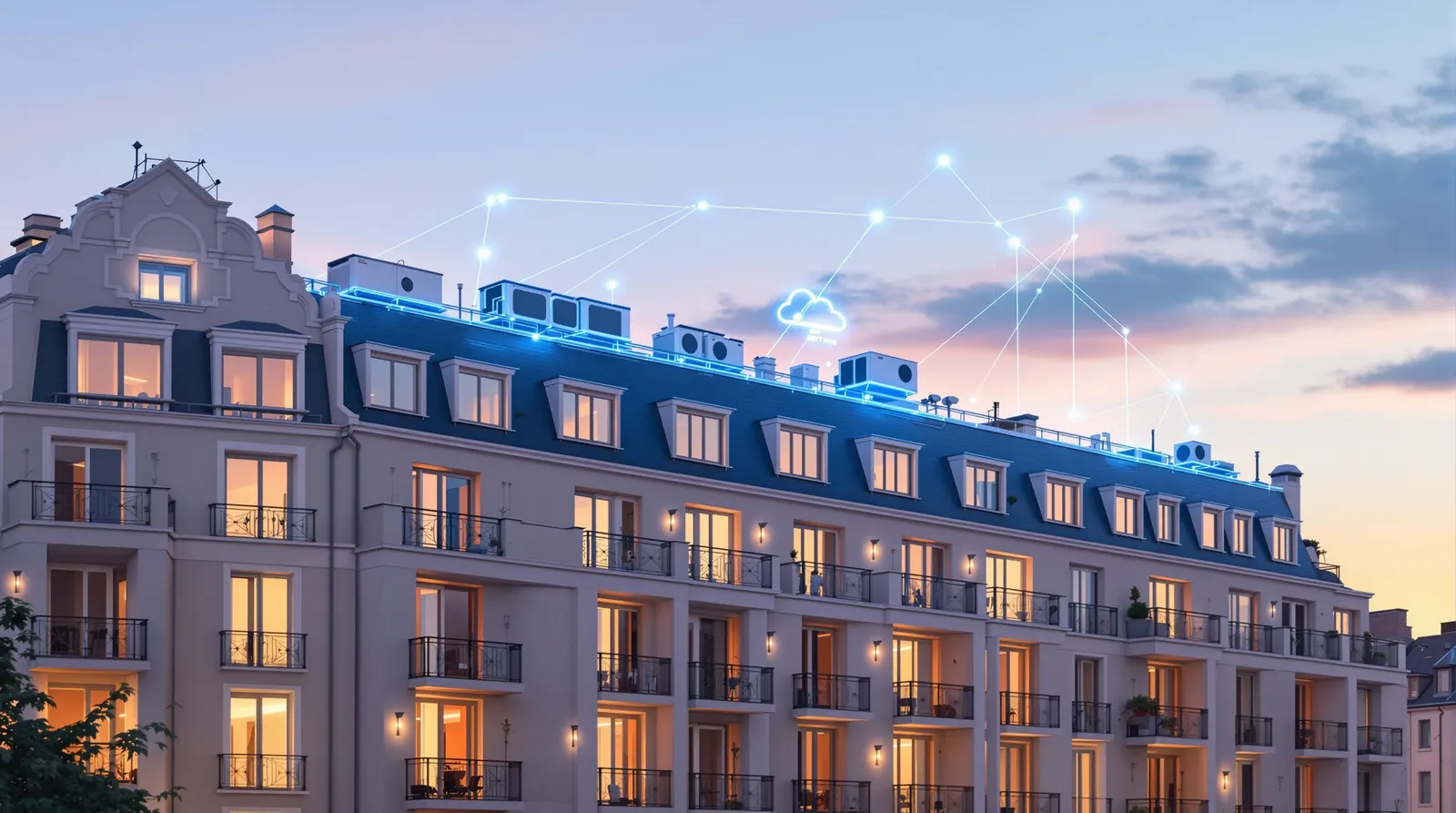
Hospitality: guest comfort, without heating empty rooms
Zone control that follows room and common-area occupancy.
Your challenges
Empty rooms
Rooms heated or cooled with no guest inside.
Guest comfort
The right temperature from check-in.
Brand image
Environmental commitments to prove.
The Kipsum solution
- Zone control based on occupancy
- KiTwin on heating and cooling plants
- KiBoard: monitoring of every property
Regulations
Tertiary decree. Hotels and tourist residences of 1,000 m² or more are covered. Targets: −40% consumption by 2030, −50% by 2040, −60% by 2050, with an annual declaration on OPERAT.
BACS decree. If the heating or cooling system exceeds 290 kW, a BMS of at least class C has been mandatory since 1 January 2025; above 70 kW, the deadline is 1 January 2030. All about the BACS decree
Client result
Our measured results, in other sectors: −14% on an industrial site, −20% on a logistics warehouse, −28% on a school complex, with payback under one year. See our case studies
Frequently asked questions
Will rooms be at the right temperature when guests arrive?
Yes: zone control brings each room to temperature before the expected arrival.
Are common areas optimised too?
Yes: the restaurant, meeting rooms and lobby are controlled according to their own occupancy schedules.
How can several properties be monitored?
KiBoard brings all hotels onto one screen, with their consumption and alerts.
Let’s talk about your buildings
A Kipsum expert reviews your situation and estimates potential savings.