
Public sector
Hospitals, schools and universities, town halls and administrations, cultural venues: public buildings to manage over time, on tight budgets.
Expand a building type to see its challenges and our solutions.
Building types
Hospitals, care homes
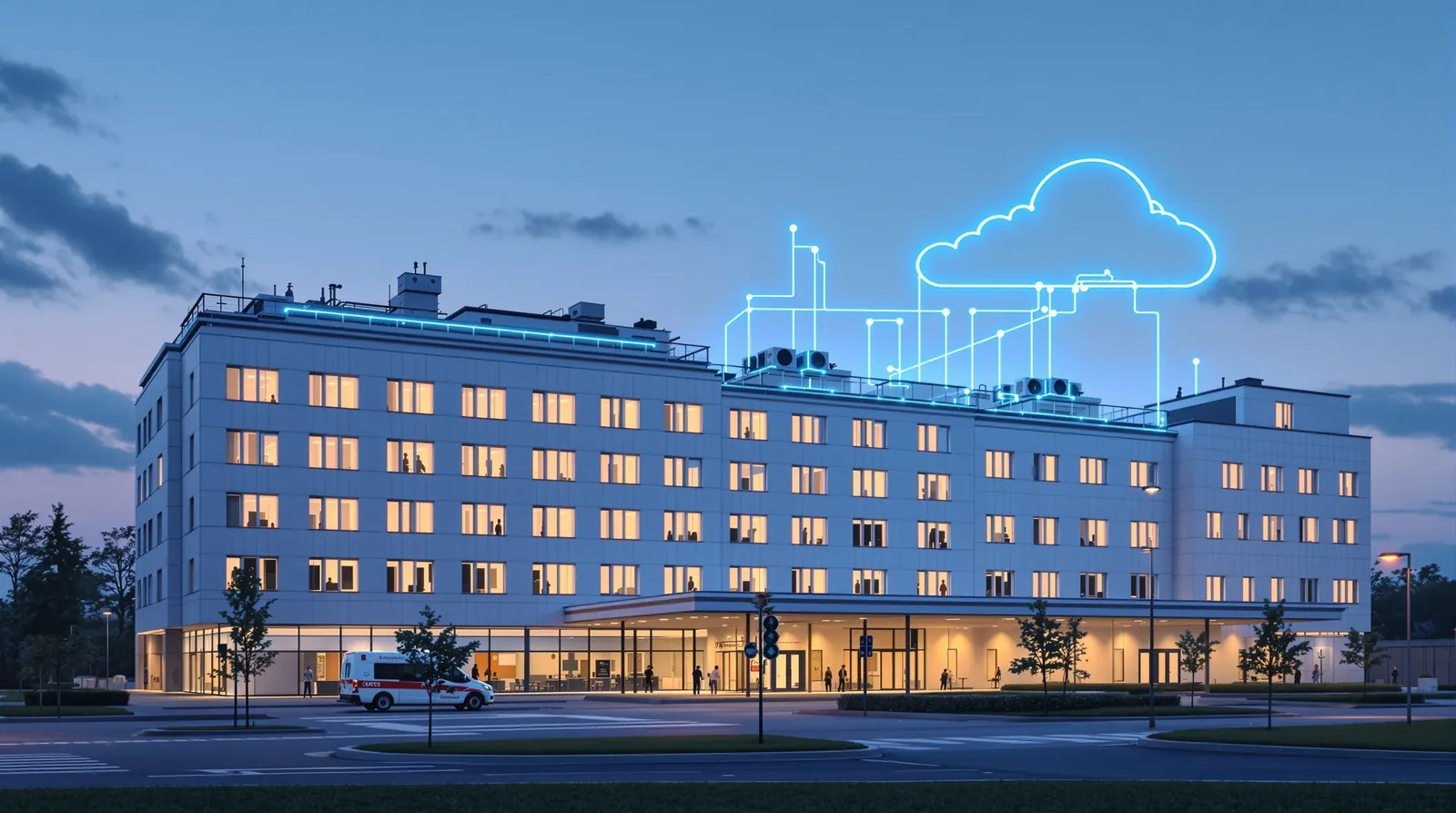
Hospitals and care homes: continuity of service and indoor air quality
Hospitals, clinics, care homes, care centres: control that saves energy without ever compromising patient comfort.
Your challenges

Continuity of service
Plants running day and night, with no room for downtime.

Air quality
Air renewal and temperatures to hold in every zone.

Tight budgets
Lasting savings to find in operating costs.
The Kipsum solution
- Continuous supervision and prioritised alarms
- Local operation even without an Internet connection
- KiTwin on boiler rooms and chilled water
Regulations
Tertiary decree. Healthcare and care facilities of 1,000 m² or more (clinics, nursing homes, care centres…) are covered. Targets: −40% consumption by 2030, −50% by 2040, −60% by 2050, with an annual declaration on OPERAT.
BACS decree. If the heating or cooling system exceeds 290 kW, a BMS of at least class C has been mandatory since 1 January 2025; above 70 kW, the deadline is 1 January 2030. All about the BACS decree
Specific to healthcare. Health requirements (air change rates, temperatures and pressure in certain zones) always come first: optimisation works within these constraints and never relaxes them.
Client result
Our measured results, in other sectors: −14% on an industrial site, −20% on a logistics warehouse, −28% on a school complex, with payback under one year. See our case studies
Frequently asked questions
Is patient and resident comfort preserved?
Yes: temperature and air quality ranges are set zone by zone, and KiTwin only optimises within them.
What happens if the internet goes down?
The installation keeps running locally, with its safety functions; prioritised alarms remain active on site.
Which equipment should be optimised first?
Boiler rooms and cooling production, which run continuously and weigh most in consumption.
Nurseries, schools, colleges, universities
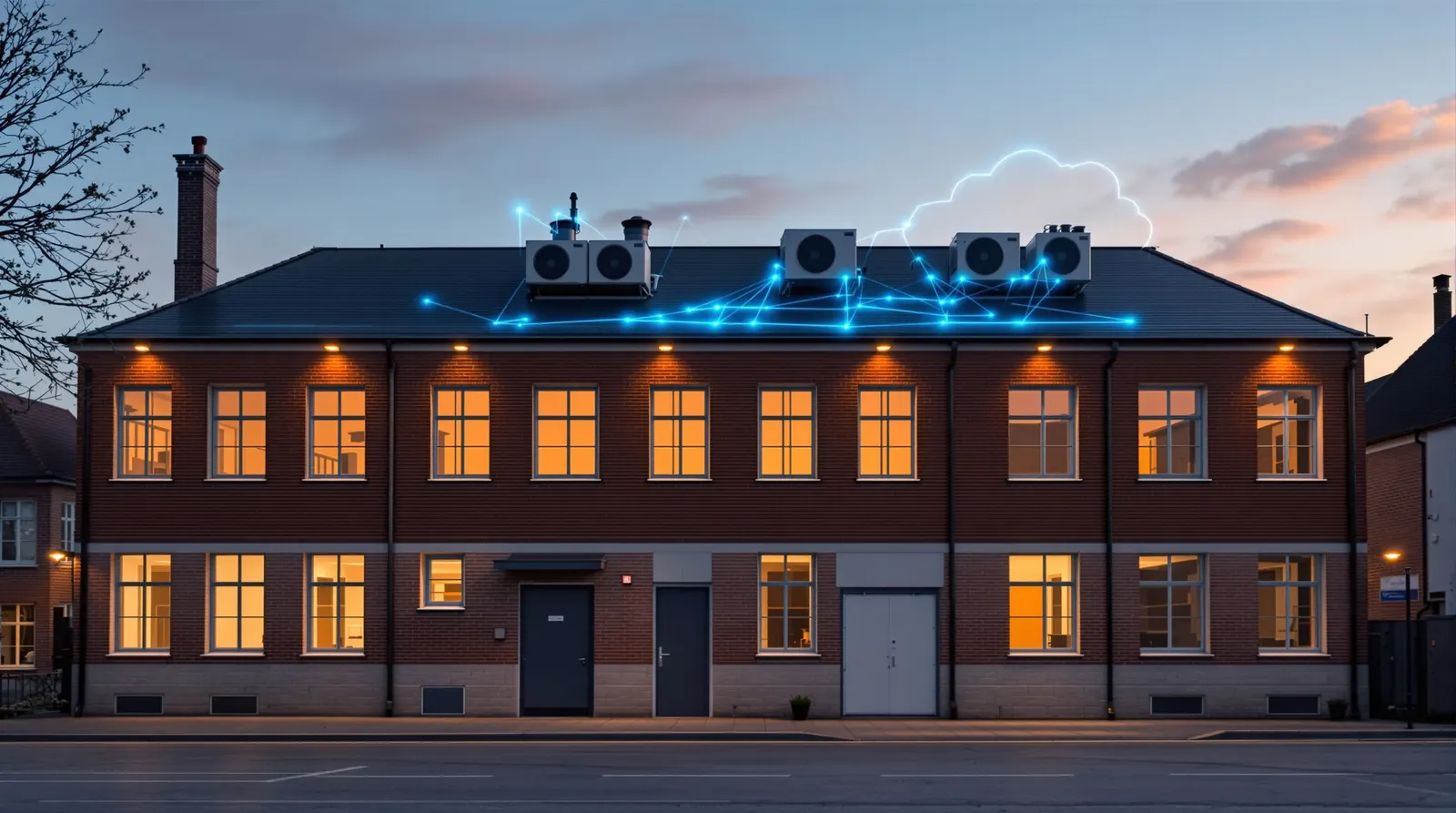
Nurseries, schools, colleges, universities: heat buildings when they are in use
Nurseries, schools, colleges, high schools and universities: precise occupancy schedules and savings partly funded by energy saving certificates (CEE).
Your challenges
Intermittent occupancy
Holidays, weekends, evenings: buildings often empty.
Public budgets
Investments to justify and fund.
Data security
Hosting and access that meet public buyers’ requirements.
The Kipsum solution
- Occupancy schedules and optimised restarts with KiTwin
- Energy saving certificate (CEE) applications handled for you
- Kipsum cloud on Google Cloud, ISO 27001 certified
Regulations
Tertiary decree. Schools and public buildings of 1,000 m² or more are covered; a local authority can pool results across its portfolio. Targets: −40% consumption by 2030, −50% by 2040, −60% by 2050, with an annual declaration on OPERAT.
BACS decree. If the heating or cooling system exceeds 290 kW, a BMS of at least class C has been mandatory since 1 January 2025; above 70 kW, the deadline is 1 January 2030. All about the BACS decree
Client result
−28%
consumption
€6,300
saved per year
< 1 year
payback
City of Courbevoie school complex, 2,900 m², with Dalkia. Connected to the district heating network, the building went from 377 to 271 MWh a year. See all our case studies
Frequently asked questions
How are holidays and weekends handled?
Occupancy schedules include the school calendar; KiTwin calculates the restart time so that classrooms are at temperature when pupils arrive.
How can the project be funded on a public budget?
CEE fund part of the BMS, and a performance contract can guarantee the savings.
Is the data hosted in a compliant way?
Yes: the Kipsum cloud is hosted on Google Cloud in the Paris region, ISO 27001 certified. Data security
Town halls, prefectures, departmental offices, tax offices
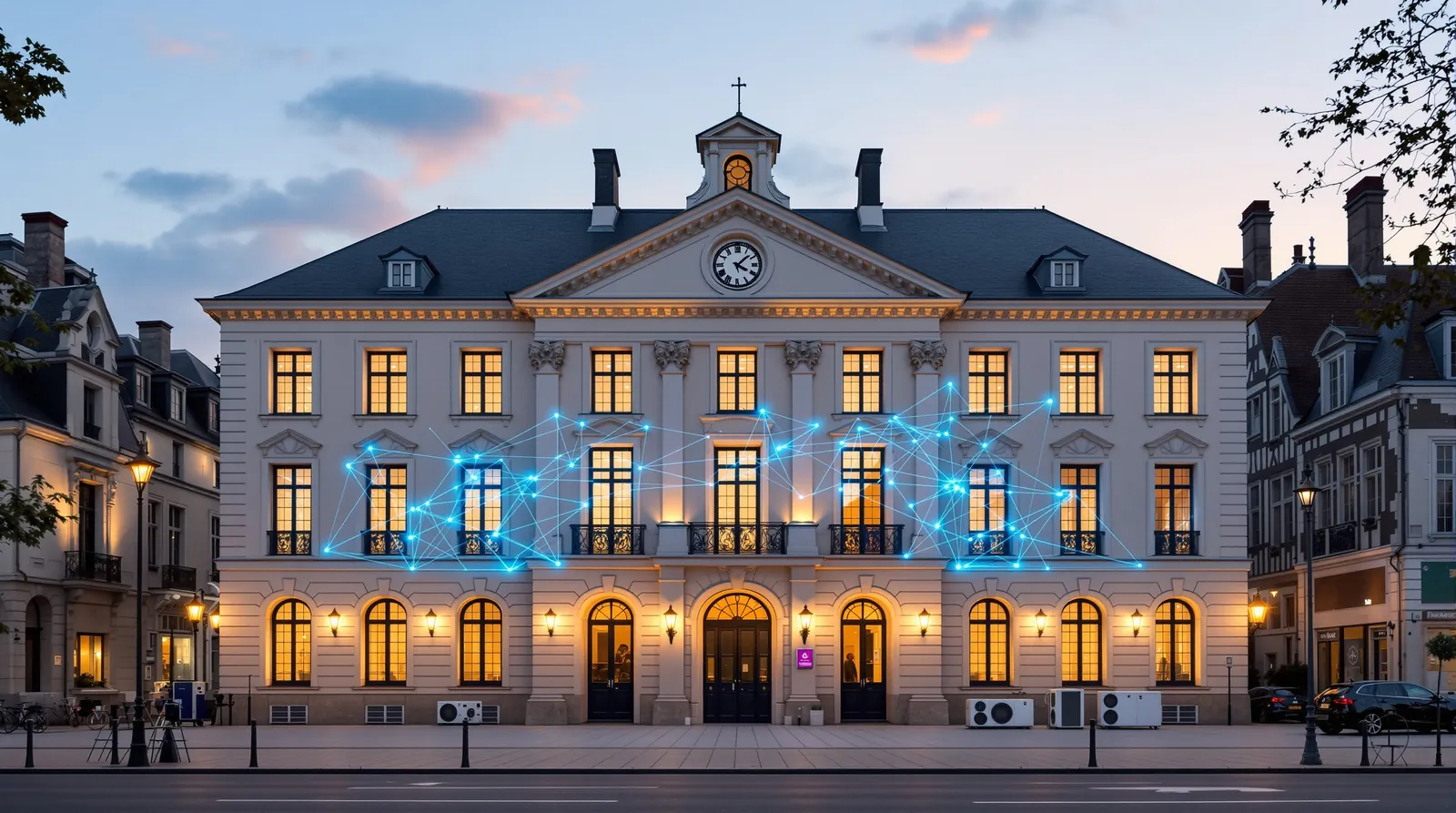
Town halls and administrations: public buildings run as efficiently as possible
Town halls, prefectures, departmental offices, tax offices: varied uses, public opening hours and a building portfolio to monitor over time.
Your challenges
Multiple uses
Offices, public reception, council chambers: different schedules and needs within the same building.
Mixed portfolio
Old and recent buildings, equipment from different generations.
Leading by example
Targets to meet and results to present to elected officials and to the public.
The Kipsum solution
- Schedules by zone (reception, offices, meeting rooms) and start-up times optimised by KiTwin
- Existing controllers connected through KiSmart, without replacing the installations
- Consumption monitoring building by building for the OPERAT declaration
- Preparation of energy saving certificate (CEE) applications
Regulations
Tertiary decree. Public buildings of 1,000 m² and more are subject to it; a local authority or administration can pool the results of its portfolio. Targets: −40% consumption in 2030, −50% in 2040, −60% in 2050, with an annual declaration on OPERAT.
BACS decree. Once the heating or air-conditioning system exceeds 290 kW, a BMS of at least class C has been mandatory since 1 January 2025; above 70 kW, the deadline is 1 January 2030. All about the BACS decree
Frequently asked questions
Does the existing equipment have to be replaced?
No: the KiSmart gateway communicates with the existing field controllers; the BMS is completed without replacing everything.
How are rooms used in the evening handled?
Occupancy schedules are set by zone: a council chamber or a wedding hall is only heated during the planned time slots.
Is the data hosted in a compliant way?
Yes: the Kipsum cloud is hosted on Google Cloud in the Paris region, ISO 27001 certified. Data security
Libraries, museums, theatres, conservatories
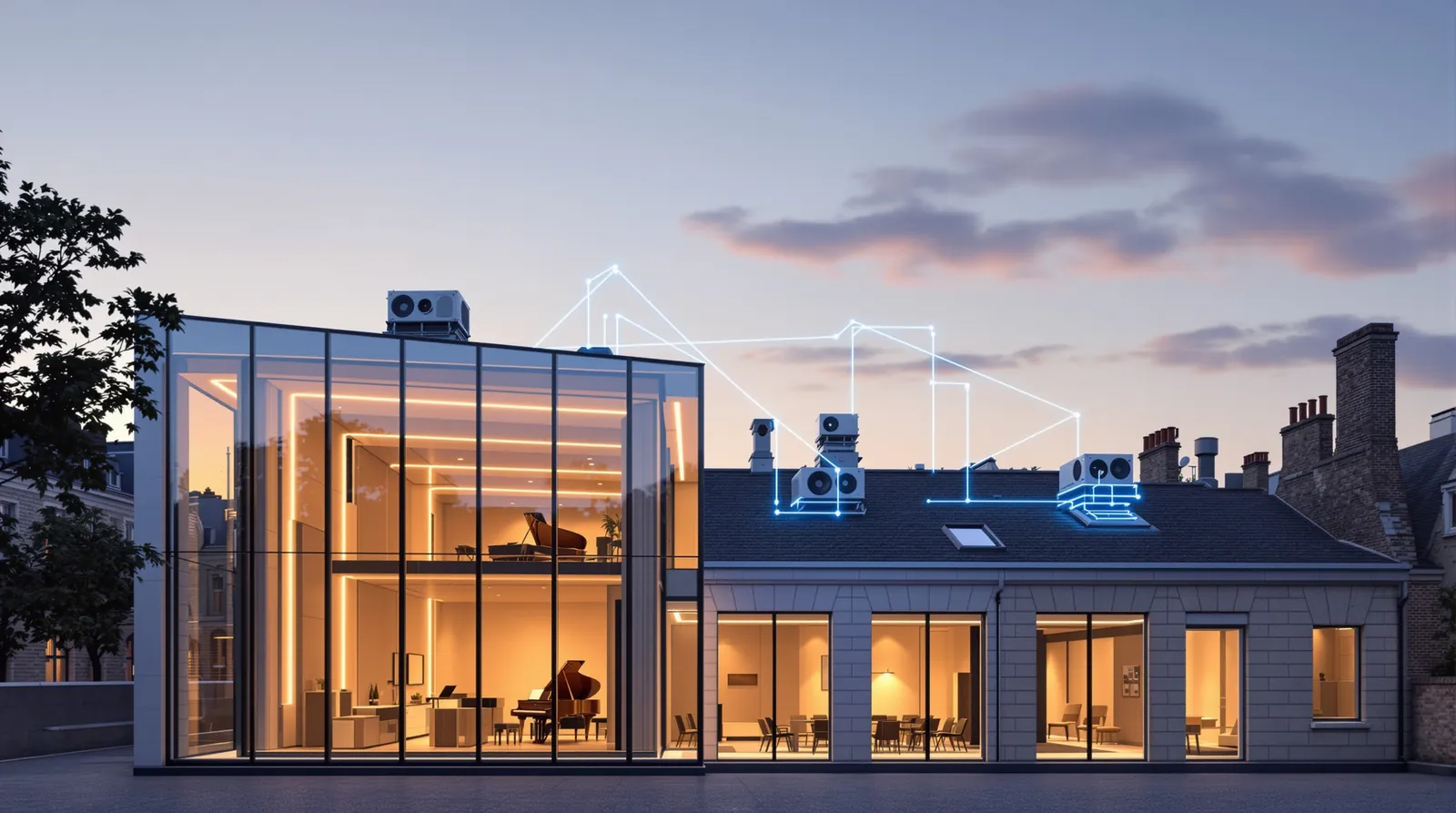
Libraries, museums, theatres, conservatories: visitor comfort and conservation
Venues open late, rooms full for a few hours and then empty, and sometimes collections to protect: fine control of heating, ventilation and humidity.
Your challenges
Peak occupancy
Performances, lessons, exhibitions: rooms full for a few hours, empty the rest of the time.
Conservation
Stable temperature and humidity for collections, instruments and archives.
Older buildings
Often historic venues, where work must be carried out without heavy construction.
The Kipsum solution
- Heating and ventilation matched to the room programme, start-up times optimised by KiTwin
- Continuous monitoring of temperature and humidity in storage areas and exhibition rooms
- Existing installations connected through KiSmart, without heavy works
- Preparation of energy saving certificate (CEE) applications
Regulations
Tertiary decree. Cultural venues of 1,000 m² and more are subject to it, like other public buildings. Targets: −40% consumption in 2030, −50% in 2040, −60% in 2050, with an annual declaration on OPERAT.
BACS decree. Once the heating or air-conditioning system exceeds 290 kW, a BMS of at least class C has been mandatory since 1 January 2025; above 70 kW, the deadline is 1 January 2030. All about the BACS decree
Frequently asked questions
Are the conservation conditions for collections respected?
Yes: the temperature and humidity setpoints of sensitive areas are limits that KiTwin never crosses; any deviation triggers an alert in KiBoard.
How are evening performances and lessons handled?
Schedules follow the programme; KiTwin calculates the start-up time so that the room is at temperature when the audience arrives.
Do you work in older buildings?
Yes: the KiSmart gateway is installed in an existing technical cabinet and reuses the controllers already in place, without any work on the building fabric.
Let’s talk about your buildings
A Kipsum expert reviews your situation and estimates potential savings.